Good morning from Green Hills Farm.
Today I want to share a tale from our farm. A tale of intercropping.
This season, as you know, global warming affected our corn garden. Our maize for huitlacoche failed and we are facing hard times.
But we had wisdom from our grandmothers. We did not plant corn alone.
We intercropped our corn with cassava and beans.
We planted beans in between the corn rows, and cassava alongside. This is an old Ugandan practice. It means if one crop fails due to climate, the others can survive and feed the family.
And it has helped us.
Beans: A Small But Important Harvest
We have already harvested the beans. I will be honest with you, the harvest is less compared to other seasons. The late rains and too much heat reduced the yield. But we harvested! We have beans. This is protein for our children, for our elderly. Even a small harvest is a big blessing when you have nothing.
Our women were so happy harvesting the beans. It gave them hope after weeding for so long.
Cassava: Our Hope for Food Security
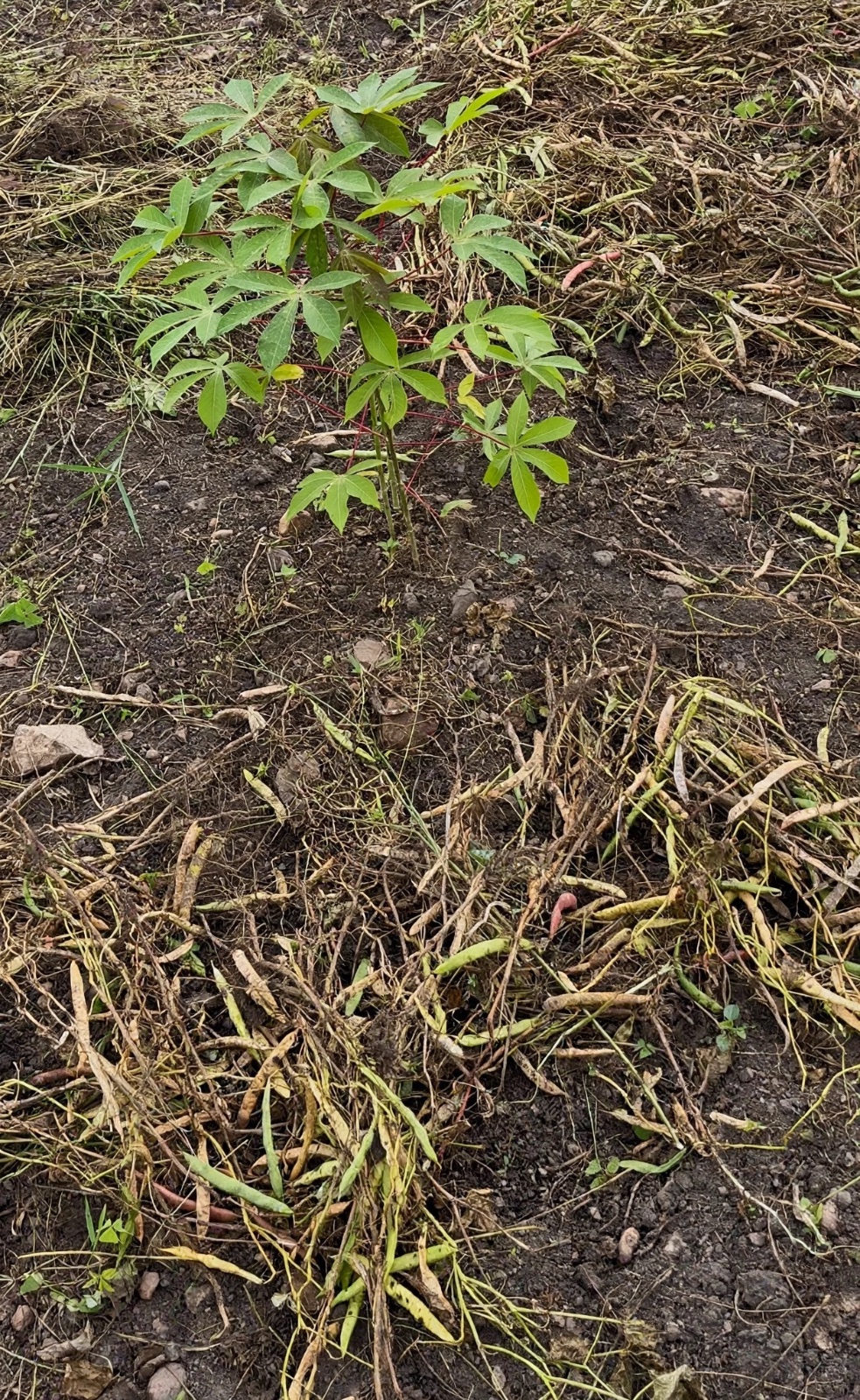
Now let me talk about cassava. Our cassava growth is very promising!
Cassava is our food security crop. Unlike corn, cassava does not fear drought. It does not cry for too much rain. Its roots grow deep underground and it can stay in the soil for months, waiting for us to need it.
When corn fails, cassava will be there. Its roots will give us flour. Its leaves can be eaten. It will keep us alive during famine season.
So you see, intercropping saved us.
• Corn was our hope for huitlacoche and income, but it failed.
• Beans gave us food today, even if less.
• Cassava is promising to give us food security tomorrow.
This is Tales of Green Hills Farm. This is how we fight climate change with local wisdom.
We plant many crops in one garden, because we love our community and we want to ensure no one sleeps hungry.
Thank you for listening to our tales. Keep following us.